
The Start of Thanksgiving
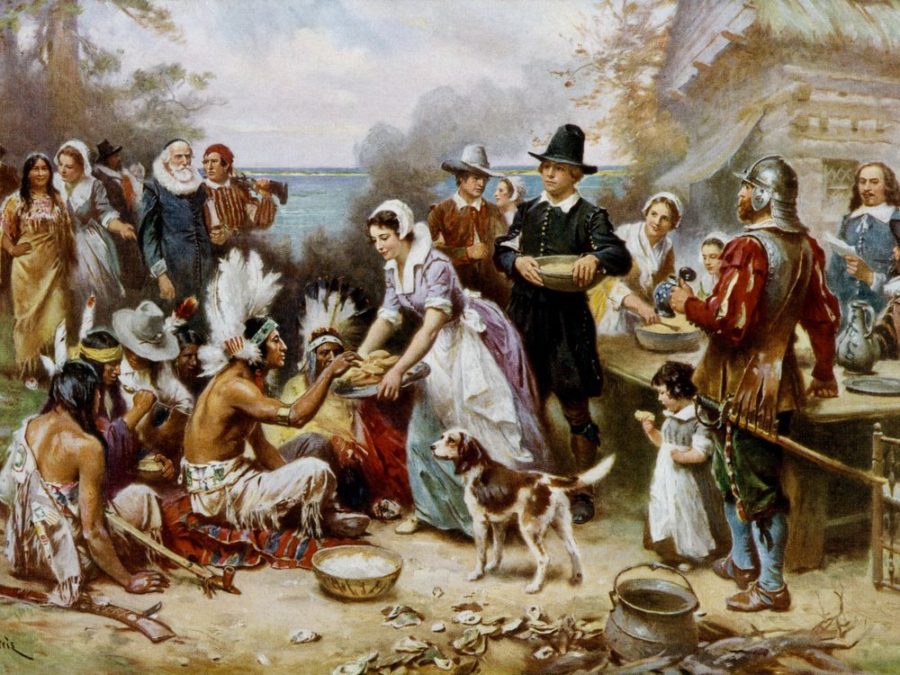
Thanksgiving tells the story of a landmark moment of coexistence, multiculturalism and even neighborliness (above: The First Thanksgiving, 1621, Jean Leon G. Ferris) when Native Americans taught Pilgrims to farm, and shared a meal with them after a successful harvest in 1621.
Thanksgiving is one of the most popular holidays in the United States. Its origin was somewhat unique and a story told for hundreds of years. As American Thanksgiving history goes, Pilgrims and Native Americans united 400 years ago for a festive feast in Plymouth, Massachusetts. But the peace didn’t last between English settlers and their Wampanoag allies, and the two were at war a generation later.The holiday is a reminder of the racism and oppression Native Americans have faced in the US.
In September 1620, a small ship called the Mayflower left Plymouth, England, carrying 102 passengers. They were a bunch of religious separatists seeking a new home where they could freely practice their faith and there were other people coming by the promise of prosperity and land ownership in the “New World.” After a treacherous crossing, their intended destination at Hudson River, they dropped anchor near the tip of Cape Cod. One month later, the Mayflower crossed Massachusetts Bay, where the Pilgrims began the work of establishing a village at Plymouth. In the first winter, most of the colonists remained on board the ship, where they suffered from scurvy and outbreaks of contagious disease.
Only half of the Mayflower’s passengers and crew lived to see spring. In March, they received a visit from a member of the Abenaki tribe who greeted them in English. Several days later, he returned with another Native American, Squanto who taught the malnutrition Pilgrims how to make corn, extract sap from maple trees, catch fish, and avoid poisonous plants. He also helped the settlers forge an alliance with the Wampanoag, a tribe. The alliance would have lasted for more than 50 years. In November 1621, after the Pilgrims’ first corn harvest proved successful, Governor William Bradford organized a celebratory feast and invited a group of the colony’s Native American allies, including the Wampanoag chief Massasoit. The festival lasted for three days. This is the start of Thanksgiving.
Some Native Americans and many others take issue with how the Thanksgiving story is presented to children, especially to elementary schoolers. In their view, the holiday paints a sunny portrait of friendship between the Pilgrims and the Wampanoag people, hiding the long and bloody war between Native Americans and European settlers. Tens of thousands died in this conflict. Of course it was a bloody war and it shouldn’t be mentioned to children but it is a major lie America tells to the youth that Thanksgiving was all sunshine and rainbows.
Your donation will support the student journalists of Lindbergh High School. Your contribution will allow us to purchase equipment, cover our annual website hosting costs, send staff to annual trainings during the school year.